


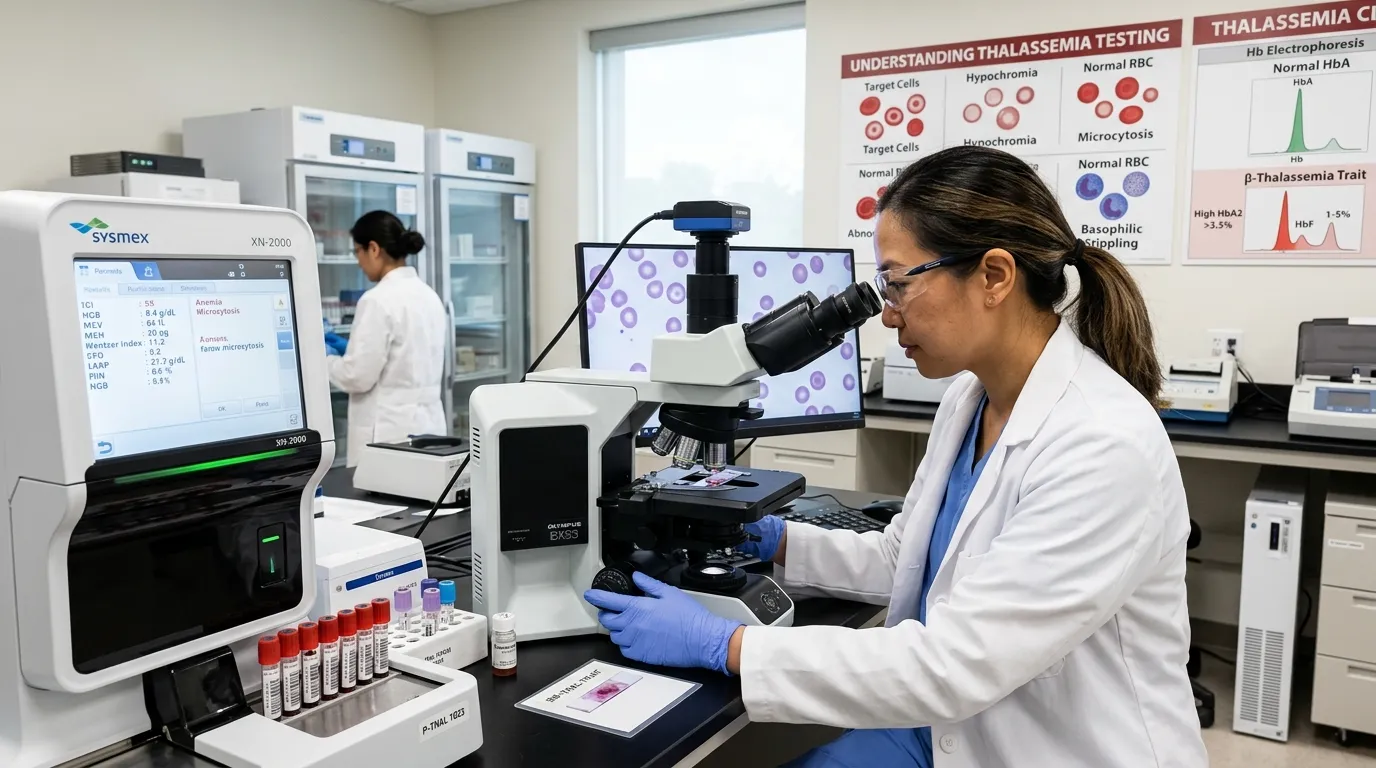
Blood serves as the body’s primary transportation network, delivering essential oxygen to every organ and tissue. When a genetic variation disrupts the production of hemoglobin, the protein responsible for oxygen transport, it leads to a condition known as thalassemia. Identifying this variation early relies entirely on a comprehensive thalassemia blood test.
Receiving a prompt and accurate diagnosis empowers patients to make informed decisions about their healthcare and family planning. Many individuals carry genetic traits for this condition without ever showing physical signs of illness. Without widespread education and early screening, these individuals might unknowingly pass severe forms of the disorder to their children.
A thorough thalassemia blood test process removes the guesswork from patient health. By highlighting the exact science behind hemoglobin production, doctors can empower patients to advocate for accurate diagnoses and avoid unnecessary treatments, such as improper iron supplementation.
What is the comprehensive guide to understanding the thalassemia blood test?
The diagnostic journey requires several different laboratory evaluations. Doctors must look at the size of the blood cells, the type of hemoglobin present, and the underlying DNA instructions.
How does a CBC test for thalassemia screening work?
A Complete Blood Count (CBC) is the foundational test for identifying potential blood disorders. This evaluation measures the size, number, and maturity of your red blood cells. According to the Centers for Disease Control and Prevention, 2023], a CBC test for thalassemia screening looks closely at Red Blood Cell Indices, specifically the Mean Corpuscular Volume (MCV) and Mean Corpuscular Hemoglobin (MCH).
Patients with thalassemia typically show a low MCV, meaning their red blood cells are smaller than average. They also display a low MCH, indicating the cells are paler than normal due to reduced hemoglobin levels. Because these specific indicators also appear in simple iron deficiency, the CBC serves as a starting point rather than a final conclusion.
What is the Hemoglobin electrophoresis test for thalassemia?
If a CBC indicates small, pale red blood cells, doctors will order a Hemoglobin electrophoresis test for thalassemia. This specific evaluation separates the different types of hemoglobin in the blood using an electrical current.
Adult blood normally contains high levels of Hemoglobin A (HbA), small amounts of Hemoglobin A2 (HbA2), and trace amounts of fetal hemoglobin (HbF). A person with beta thalassemia often displays elevated levels of HbA2 and HbF as the body attempts to compensate for defective HbA production. Interpreting these specific ratios allows hematologists to differentiate between various anemia-related conditions.
When is Genetic testing for thalassemia diagnosis recommended?
While initial blood tests suggest a problem, only DNA analysis can confirm the exact genetic configuration. Genetic testing for thalassemia diagnosis maps the patient’s DNA to identify specific alpha-globin or beta-globin gene deletions and mutations.
Choose genetic testing if your CBC results show microcytosis but your ferritin levels are normal, as this rules out iron deficiency. Genetic tests are also highly recommended for prospective parents during family planning. Understanding the exact mutations allows genetic counselors to calculate precise inheritance risks for future children.
What should you expect during the thalassemia blood test process?
Navigating medical tests can feel overwhelming, but the process for evaluating hemoglobin disorders is relatively straightforward.
What happens before the test?
Preparation for a thalassemia blood test requires minimal effort. In most cases, patients do not need to fast before the procedure. You can eat and drink water normally. However, you should inform your doctor about any current medications or iron supplements you take, as these can alter ferritin levels and complicate the differential diagnosis.
What happens during the test?
The procedure involves a standard blood draw. A phlebotomist will clean an area on your arm, insert a small needle into a vein, and collect a few vials of blood. The entire process takes less than five minutes. Patients might feel a brief pinch, but the discomfort is minimal.
How do you receive and understand the results?
After the laboratory analyzes the samples, your doctor will schedule a follow-up appointment to discuss the findings. CBC results generally return within a few days, while comprehensive genetic panels may take a few weeks. Your doctor will explain whether the blood work indicates normal hemoglobin, a mild carrier trait, or a more complex disease state.
How do doctors interpret your thalassemia blood test results?
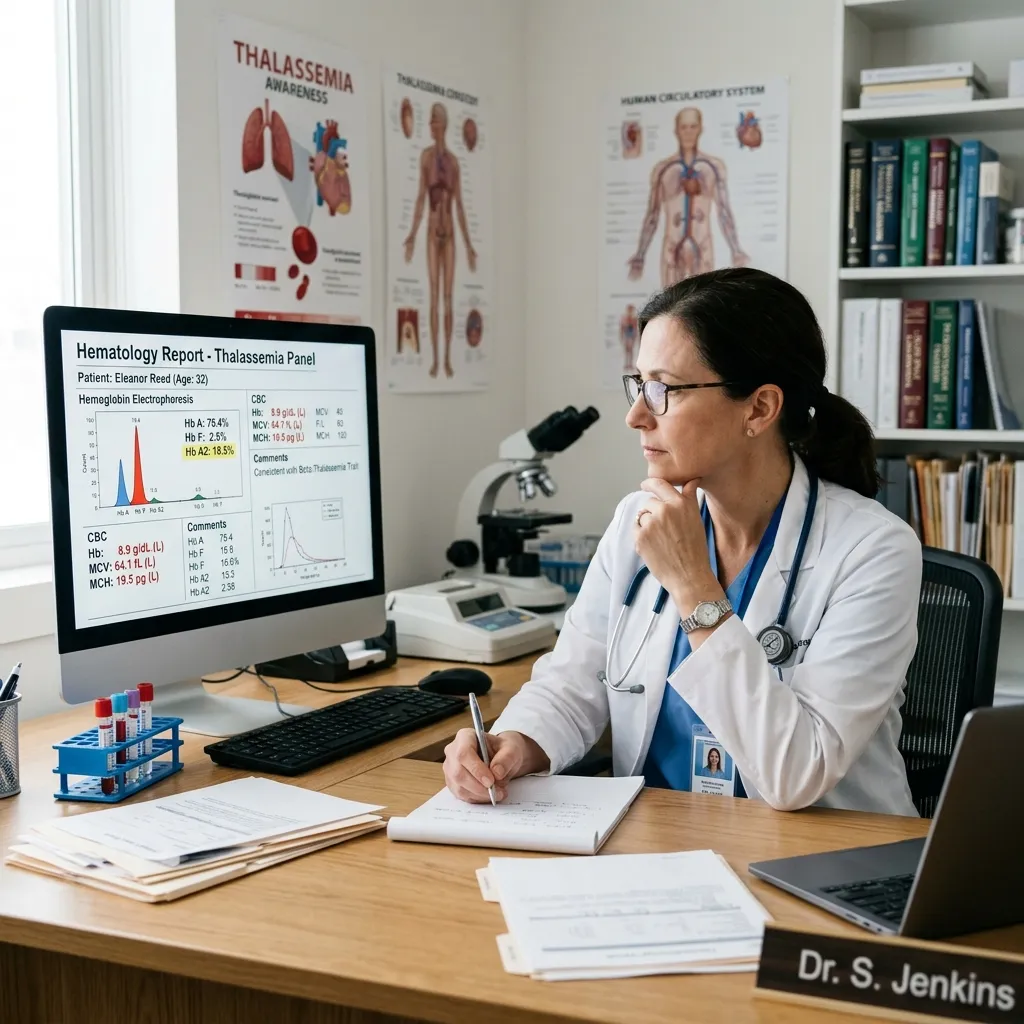 Understanding the laboratory data requires a clear explanation of carrier states versus active disease.
What is the difference between normal results, traits, and major thalassemia?
Normal results indicate perfectly balanced alpha and beta-globin production. If the thalassemia blood test reveals a trait (also known as minor thalassemia), the patient has inherited a genetic mutation from one parent. These individuals usually experience no symptoms beyond mild microcytosis. Conversely, results indicating thalassemia major or intermedia mean the patient inherited mutations from both parents, leading to significant hemoglobin disruption and chronic anemia.
What is the significance of being a carrier?
Discovering that you carry a thalassemia trait is the first step in proactive family planning. Because the condition follows an autosomal recessive inheritance pattern, two carrier parents have a 25% chance of passing a severe form of the disorder to their child with each pregnancy.
What should you do if your results are abnormal?
If your results show abnormalities, the immediate next step is consulting a hematologist. A specialist will help you distinguish between alpha and beta variations, ensuring you do not receive harmful iron supplements for a genetic condition.
What are the different thalassemia types and their impact on health?
The specific genetic mutation dictates the severity of the disease. Thalassemia falls into two primary categories based on the affected globin chains.
How does alpha thalassemia affect the body?
Alpha thalassemia occurs when the body fails to produce enough alpha-globin chains. Four specific genes control this production.
- Silent Carrier: Missing one gene causes no symptoms.
- Alpha Thalassemia Trait (Minor): Missing two genes causes slightly smaller red blood cells.
- Hemoglobin H Disease: Missing three genes leads to moderate to severe anemia, an enlarged spleen, and significant fatigue.
- Hydrops Fetalis: Missing all four genes is the most severe form, usually resulting in fatal complications before or shortly after birth.
You can explore the detailed differences between these conditions by reading about alpha vs beta thalassemia.
How does beta thalassemia affect the body?
Beta thalassemia involves mutations in the two genes that control beta-globin production.
- Beta Thalassemia Minor (Trait): Inheriting one mutated gene causes minimal health disruptions.
- Beta Thalassemia Intermedia: This moderate form causes varied degrees of anemia that may occasionally require blood transfusions.
- Beta Thalassemia Major (Cooley’s Anemia): Inheriting two severely mutated genes leads to life-threatening anemia requiring lifelong blood transfusions and iron chelation therapy.
Why is family screening and genetic counseling crucial for thalassemia?
Public health initiatives rely heavily on education to prevent the spread of severe genetic disorders.
Why is family screening considered crucial?
Many individuals only discover their carrier status after experiencing complications or having a child born with a severe form of the disease. Screening family members helps identify hidden carriers within the bloodline, empowering relatives to make informed decisions before starting their own families.
What is the role of genetic counseling?
Genetic counselors calculate precise statistical risks for future pregnancies. They explain how different inheritance patterns affect offspring and guide families through complex medical data. This professional support removes the confusion from the family planning process.
How do preconception and prenatal testing work?
Couples can undergo preconception testing to evaluate their combined risk. If both partners are carriers, doctors offer prenatal testing options like chorionic villus sampling (CVS) or amniocentesis. These tests evaluate the fetal DNA to determine the exact genetic health of the developing baby.

1. Is the thalassemia blood test painful?
The test involves a standard blood draw from a vein in your arm. You will feel a brief, mild pinch when the needle enters the skin, but the procedure is quick and generally involves very little pain.
2. How long does it take to get thalassemia blood test results?
Basic CBC results typically return within 24 to 48 hours. However, a Hemoglobin electrophoresis test for thalassemia or advanced genetic testing can take one to three weeks to process.
3. Do I need to fast before a thalassemia blood test?
No fasting is required for standard thalassemia screening. You can eat and drink normally before your appointment unless your doctor ordered additional metabolic tests that specifically require fasting.
4. Can a thalassemia blood test detect all types of thalassemia?
Yes. A comprehensive sequence that includes a CBC, hemoglobin electrophoresis, and DNA analysis can accurately identify all specific types and severities of alpha and beta thalassemia.
5. What is the difference between thalassemia trait and thalassemia disease?
A person with a thalassemia trait carries one mutated gene, generally experiences no symptoms, and lives a normal life. Thalassemia disease occurs when a person inherits mutated genes from both parents, causing moderate to severe chronic anemia.
6. If I have the thalassemia trait, will my children have it?
If you have the trait and your partner does not, your children have a 50% chance of inheriting the trait. If both you and your partner have the trait, your children have a 25% chance of being born with severe thalassemia disease.
7. Is there a cure for thalassemia?
Currently, bone marrow or stem cell transplantation is the only established cure for severe thalassemia. Emerging gene therapies, such as CRISPR-based treatments, are actively undergoing clinical trials and show great promise for future cures.
8. How often should someone with a thalassemia trait be tested?
Once genetic testing confirms your trait status, your DNA will not change. You do not need repeated genetic tests, but you should undergo an annual CBC to monitor your general blood health.
9. What are the risks of a thalassemia blood test?
The risks are extremely low and limited to standard blood draw complications. These include slight bruising at the puncture site, minor bleeding, or temporary lightheadedness.
10. Can other conditions affect thalassemia blood test results?
Yes. Severe iron deficiency anemia can lower HbA2 levels, potentially masking a beta thalassemia trait during a hemoglobin electrophoresis test. This is why doctors must evaluate your ferritin levels alongside your hemoglobin.
