



Mild alpha thalassemia is an inherited blood condition caused by one or two missing alpha-globin genes. It usually causes no symptoms or only very mild anemia, needs little to no treatment, and matters most for family planning.
Many people live their entire lives carrying mild alpha thalassemia and never know it. A routine blood test might reveal slightly smaller-than-normal red blood cells, yet they feel completely healthy. That’s the quiet nature of this condition—it often hides in plain sight.
This guide explains what mild alpha thalassemia is, the subtle signs to watch for, and how doctors confirm the diagnosis. You’ll learn why it is frequently mistaken for iron deficiency anemia, what treatment (if any) is needed, and why understanding your carrier status is important for protecting future generations.
Although mild alpha thalassemia usually does not cause serious health problems, recognizing it can prevent unnecessary iron supplements and reduce confusion during medical evaluations. Early diagnosis also helps healthcare providers distinguish it from other forms of anemia and recommend appropriate follow-up when needed. If both parents carry alpha thalassemia gene changes, their children may be at risk of inheriting a more severe form of the condition. For this reason, genetic counseling and carrier screening are valuable, especially for couples planning a family. Understanding the condition empowers individuals to make informed healthcare and reproductive decisions while avoiding unnecessary worry.
Whether a confusing blood test brought you here or you’re simply curious, the information below is designed to provide clear, evidence-based answers. By the end of this guide, you’ll have a better understanding of mild alpha thalassemia, its symptoms, diagnosis, treatment options, and what living with this inherited blood disorder really means.
What Is Mild Alpha Thalassemia?
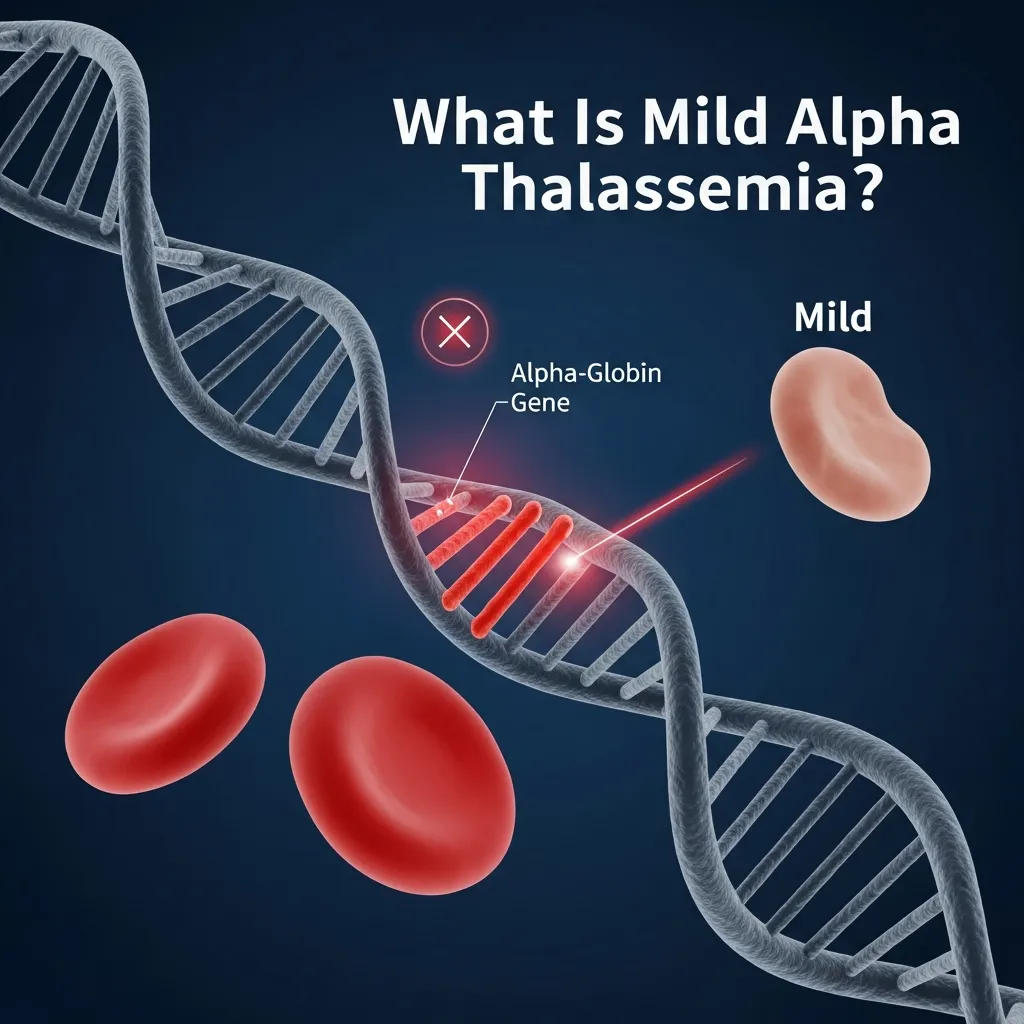 Alpha thalassemia is an inherited blood disorder that reduces the body’s production of alpha-globin, an essential component of hemoglobin. Hemoglobin is the protein inside red blood cells responsible for carrying oxygen from the lungs to the body’s tissues. When alpha-globin production decreases, red blood cells become smaller (microcytic) and contain less hemoglobin than normal, which may result in mild anemia or no noticeable symptoms at all.
Most individuals with mild alpha thalassemia remain healthy and do not require medical treatment. The condition is often discovered accidentally during routine blood tests performed for annual checkups, pregnancy, or investigations for suspected iron deficiency. Because the laboratory findings can closely resemble iron deficiency anemia, additional blood tests or genetic testing may be needed to make the correct diagnosis and avoid unnecessary iron supplementation.
Why Understanding Mild Alpha Thalassemia Matters
The importance of understanding mild alpha thalassemia goes beyond its mild symptoms. Since carriers usually feel completely healthy, they may unknowingly pass the altered genes to their children. If both parents carry alpha-globin gene mutations, each pregnancy carries a higher risk of producing a child with a more severe form of alpha thalassemia, including Hemoglobin H disease or, in rare cases, alpha thalassemia major (Hb Bart syndrome).
Knowing your carrier status empowers you to make informed healthcare and family planning decisions. Genetic counseling can help couples understand inheritance patterns, evaluate reproductive risks, and explore available testing options before or during pregnancy. Early identification also helps healthcare providers interpret blood test results accurately, reducing unnecessary treatments and ensuring appropriate long-term care. Although mild alpha thalassemia rarely affects life expectancy or daily activities, awareness of the condition benefits both individuals and future generations.
The Genetic Basis of Alpha Thalassemia
Mild alpha thalassemia is purely a matter of genetics. Understanding the science makes the condition far less intimidating.
Hemoglobin and its components
Normal adult hemoglobin needs a precise balance of two alpha-globin chains and two beta-globin chains. When this balance holds, red blood cells form correctly and carry oxygen efficiently, when alpha-globin production drops, the balance tips, and red blood cells turn out smaller and paler.
Alpha-globin genes and their role
Four alpha-globin genes sit on chromosome 16—two inherited from each parent. These genes, known as HBA1 and HBA2, work together to produce alpha-globin chains. When all four function normally, alpha-globin production stays balanced.
The genetics of mild alpha thalassemia
The number of affected genes determines the form of the condition. Mild alpha thalassemia covers the two least severe states on the spectrum.
Alpha thalassemia trait (two-gene deletion): Also called alpha thalassemia minor, this form involves two missing alpha-globin genes. The two remaining genes still produce hemoglobin, just slightly less than normal. The result is mild microcytosis (smaller red blood cells) and sometimes very mild anemia. The two missing genes can be arranged in two ways—both on the same chromosome (–/αα) or one on each (-α/-α). This distinction matters for inheritance risk.
Silent carrier alpha thalassemia (one-gene deletion): This is the mildest form, with just one missing gene (-α/αα). The three remaining genes produce nearly normal amounts of hemoglobin, so carriers have no symptoms and usually show normal blood work. For a deeper look at this state, see this guide on silent carrier alpha thalassemia.
Mild Alpha Thalassemia Symptoms: Recognizing the Subtle Signs
 The most reassuring fact about mild alpha thalassemia symptoms is that most carriers don’t have any. The body compensates well enough that daily life carries on completely unaffected.
Often asymptomatic or mild anemia
With enough working alpha-globin genes, the body maintains near-normal oxygen delivery. There’s usually no anemia severe enough to cause problems and no visible signs. People with mild alpha thalassemia can hold demanding jobs, exercise hard, and go through pregnancy without limitations tied to the condition.
When mild alpha thalassemia symptoms do appear, they trace back to mild anemia. The red blood cells are smaller and slightly fewer, so oxygen delivery dips a little. This rarely causes noticeable trouble.
Fatigue and weakness
Fatigue is the most reported symptom among carriers who notice anything at all. Slightly reduced oxygen delivery means muscles and organs get a touch less fuel. For most people, this is barely perceptible—it might show up as feeling worn out after activities that wouldn’t normally tire them.
Pale skin
Hemoglobin gives blood its red color, so slightly lower levels can make the skin look paler. Mild pallor on its own is rarely a concern. Sudden or pronounced paleness paired with other symptoms, however, is worth raising with a doctor.
Shortness of breath (in some cases)
These activity-related symptoms appear when the body demands more oxygen than usual, such as during exercise. Mild anemia means the blood carries slightly less oxygen, so some carriers feel briefly breathless or lightheaded during exertion. Rest usually resolves it quickly.
Jaundice (rarely)
Jaundice—a yellowing of the skin or eyes—is uncommon in mild alpha thalassemia. It can occasionally appear if red blood cells break down faster than normal, releasing bilirubin. In carriers, this is rare and usually mild.
Differentiating from iron deficiency anemia
Here’s where confusion sets in. Both mild alpha thalassemia and iron deficiency anemia produce microcytic, hypochromic anemia—small, pale red blood cells. On a basic blood test, the mean corpuscular volume (MCV) and mean corpuscular hemoglobin (MCH) look similar in both. The key difference is iron levels.
|
Marker |
Alpha Thalassemia Trait |
Iron Deficiency Anemia |
|---|---|---|
|
MCV (cell size) |
Low |
Low |
|
Serum ferritin |
Normal |
Low |
|
TIBC |
Normal |
High |
|
RDW |
Normal |
Often elevated |
|
RBC count |
Normal or high |
Low |
|
Cause |
Genetic (inherited) |
Diet, absorption, or blood loss |
People with iron deficiency have low ferritin, while those with the alpha thalassemia trait have normal ferritin. For a full breakdown of how these two conditions differ, this guide on alpha trait vs iron deficiency anemia is worth a read.
Diagnosis of Mild Alpha Thalassemia
Because mild alpha thalassemia often hides, accurate testing is the only way to know your status for sure.
Initial blood tests: complete blood count (CBC)
The first step in diagnosis is usually a Complete Blood Count (CBC). Doctors look at red blood cell indices for early clues.
- Mean corpuscular volume (MCV) and mean corpuscular hemoglobin (MCH): A low MCV signals smaller red blood cells and is a common first sign. Low MCH points to less hemoglobin per cell.
- Red blood cell count: In the alpha thalassemia trait, the RBC count is often normal or even slightly high—a useful clue that separates it from iron deficiency, where the count is typically low.
For a detailed walkthrough of these numbers, see this thalassemia blood test guide.
Further diagnostic tests
When a CBC raises questions, doctors order more specialized tests.
- Hemoglobin electrophoresis: This test separates and measures the types of hemoglobin in the blood. It often appears normal in mild alpha thalassemia, but it helps rule out other hemoglobin disorders.
- HPLC (high-performance liquid chromatography): A precise method that measures hemoglobin fractions, often used alongside or instead of electrophoresis to detect variants.
- Genetic testing—the definitive diagnosis: DNA analysis is the gold standard. It maps the alpha-globin genes and confirms exactly how many are missing. Because mild forms often show normal CBC and electrophoresis results, genetic testing is the only way to confirm the silent carrier state. For the full diagnostic pathway, see this guide on thalassemia diagnosis methods.
Genetic counseling plays an important role here. A counselor can explain what your results mean, calculate inheritance risk, and help you and a partner interpret your status together.
When to suspect mild alpha thalassemia
You might suspect mild alpha thalassemia if a routine blood test shows small red blood cells (low MCV) but normal iron levels. A family history of thalassemia, or ancestry from Southeast Asian, African, Mediterranean, or Middle Eastern regions, also raises the likelihood.
Mild Alpha Thalassemia Treatment and Management
 For most carriers, mild alpha thalassemia treatment is refreshingly simple—often, no treatment at all.
No specific treatment is often required
The body compensates naturally for the missing genes, keeping hemoglobin levels close to normal. There are no medications, no transfusions, and no special restrictions for the vast majority of carriers.
Folic acid supplementation (in some cases)
Folic acid provides the building blocks the body uses to make new red blood cells. Some doctors recommend it as a gentle, supportive supplement, especially during pregnancy. It’s safe and supports healthy red blood cell production.
Avoiding iron overload
This is a critical point in mild alpha thalassemia treatment. Carriers should not take iron supplements unless a doctor confirms a genuine, separate deficiency. Because the small red blood cells of the trait can be mistaken for iron deficiency, some carriers are wrongly prescribed iron. According to the Centers for Disease Control and Prevention, proper testing prevents thalassemia carriers from being wrongly treated for iron deficiency. Unnecessary iron can build up over time and cause harm.
Regular monitoring and follow-up
The most important practical step is telling your doctor about your carrier status. This ensures mild microcytosis isn’t mistaken for iron deficiency. Occasional check-ups, especially during pregnancy or illness, help keep an eye on your general blood health.
Lifestyle and diet recommendations
Carriers need no special diet or restrictions. A balanced, nutrient-rich diet supports overall health. Foods rich in folate—such as leafy greens, beans, and lentils—help the bone marrow produce healthy red blood cells.
Genetic counseling for family planning
For prospective parents, mild alpha thalassemia carries real significance. Because the condition is inherited, two carriers can pass more serious genetic combinations to their children. Genetic counseling explains inheritance risks in plain language and helps couples plan with confidence.
Living with Mild Alpha Thalassemia
A diagnosis of mild alpha thalassemia rarely changes daily life, but a few smart steps help.
Impact on daily life
For most carriers, the impact is essentially zero. They pursue demanding careers, exercise intensely, and live full, active lives. The condition does not progress to a severe form over time—your genetic makeup stays the same throughout life.
Pregnancy and mild alpha thalassemia
Many carriers go through pregnancy without issues, though mild anemia may become slightly more noticeable. The bigger concern is genetic: if both partners are carriers, prenatal testing and genetic counseling can clarify the risk to the baby. Prenatal options like chorionic villus sampling (CVS) and amniocentesis analyze fetal DNA early in pregnancy.
Dispelling myths and misconceptions
A frequent myth is that carriers will eventually get sick. This is false—your genetic makeup doesn’t change, and mild alpha thalassemia won’t progress to a severe form. Another myth is that thalassemia is contagious. It isn’t; it’s strictly inherited and cannot spread through contact.
Importance of awareness and education
Good information turns fear into confidence. Carriers who understand their status can make smart decisions, avoid unnecessary treatments, and protect future generations. To explore the broader condition, this guide on alpha thalassemia trait symptoms offers more detail.
Research and Future Directions
Science continues to deepen our understanding of alpha thalassemia and its management.
Advancements in genetic testing
Researchers keep refining genetic testing, making it faster and more precise. Better detection means more carriers learn their status before starting a family.
Potential therapeutic interventions
For severe forms of thalassemia, gene-editing technologies like CRISPR-Cas9 are showing strong promise in clinical trials. While mild alpha thalassemia needs no treatment, these advances offer hope for those with serious forms.
Global efforts in thalassemia prevention and management
The World Health Organization recognizes thalassemia as a major global public health concern. Many countries run screening programs, including premarital and prenatal testing, to identify carriers early and reduce severe cases in future generations.
Conclusion
Mild alpha thalassemia is usually a harmless inherited blood disorder that causes little or no symptoms, but recognizing it is still important. An accurate diagnosis helps distinguish it from iron deficiency anemia, prevents unnecessary treatment, and provides valuable information for future health decisions. If you have mild alpha thalassemia or carry the alpha thalassemia trait, regular medical guidance and genetic counseling can help you understand your condition and make informed family planning choices. With the right knowledge and appropriate care, most people with mild alpha thalassemia live healthy, active, and normal lives.
Frequently Asked Questions (FAQs)
1. What is mild alpha thalassemia?
Mild alpha thalassemia is the gentlest end of the alpha thalassemia spectrum. It includes the silent carrier state (one missing alpha-globin gene) and the alpha thalassemia trait (two missing genes). Both cause little or no symptoms and need little to no treatment.
2. What are the most common mild alpha thalassemia symptoms?
Most carriers have no symptoms at all. When mild alpha thalassemia symptoms appear, they’re subtle—mild fatigue, slight paleness, or shortness of breath during exercise, all linked to mild anemia. Jaundice is rare.
3. How is mild alpha thalassemia diagnosed?
Diagnosis usually starts with a Complete Blood Count (CBC) showing a low MCV. Hemoglobin electrophoresis and iron studies follow, but genetic (DNA) testing is the definitive method to confirm how many alpha-globin genes are missing.
4. Does mild alpha thalassemia need treatment?
In most cases, mild alpha thalassemia treatment isn’t needed. Some doctors suggest folic acid, especially during pregnancy. The most important step is avoiding unnecessary iron supplements unless a genuine deficiency is confirmed.
5. How is the alpha thalassemia trait different from iron deficiency anemia?
Both cause small red blood cells, but ferritin tells them apart. Ferritin is normal in the alpha thalassemia trait and low in iron deficiency anemia. The RBC count is often normal or high in the trait, but low in iron deficiency.
6. Should I take iron if I have mild alpha thalassemia?
No—not unless a doctor confirms a real iron deficiency. Carriers usually have normal iron levels despite small red blood cells. Unnecessary iron can build up and cause harm, so confirm your status with iron studies first.
7. Is mild alpha thalassemia hereditary?
Yes. Mild alpha thalassemia is passed down through families. A carrier can pass the affected genes to their children, and the risk of a serious form rises when both parents carry alpha thalassemia genes.
8. Will mild alpha thalassemia get worse over time?
No. Your genetic makeup doesn’t change throughout life. Mild alpha thalassemia will not progress into a severe form. It remains a stable, mild condition.
9. How does mild alpha thalassemia affect pregnancy?
Many carriers have healthy pregnancies, though mild anemia may become slightly more noticeable. The main concern is genetic—if both partners are carriers, prenatal testing and genetic counseling can clarify the risk to the baby.
10. When should I see a doctor about mild alpha thalassemia?
See a doctor if a blood test shows small red blood cells (low MCV), especially with normal iron levels or a family history of thalassemia. Ask about genetic testing and, if you’re planning a family, consider genetic counseling.
