


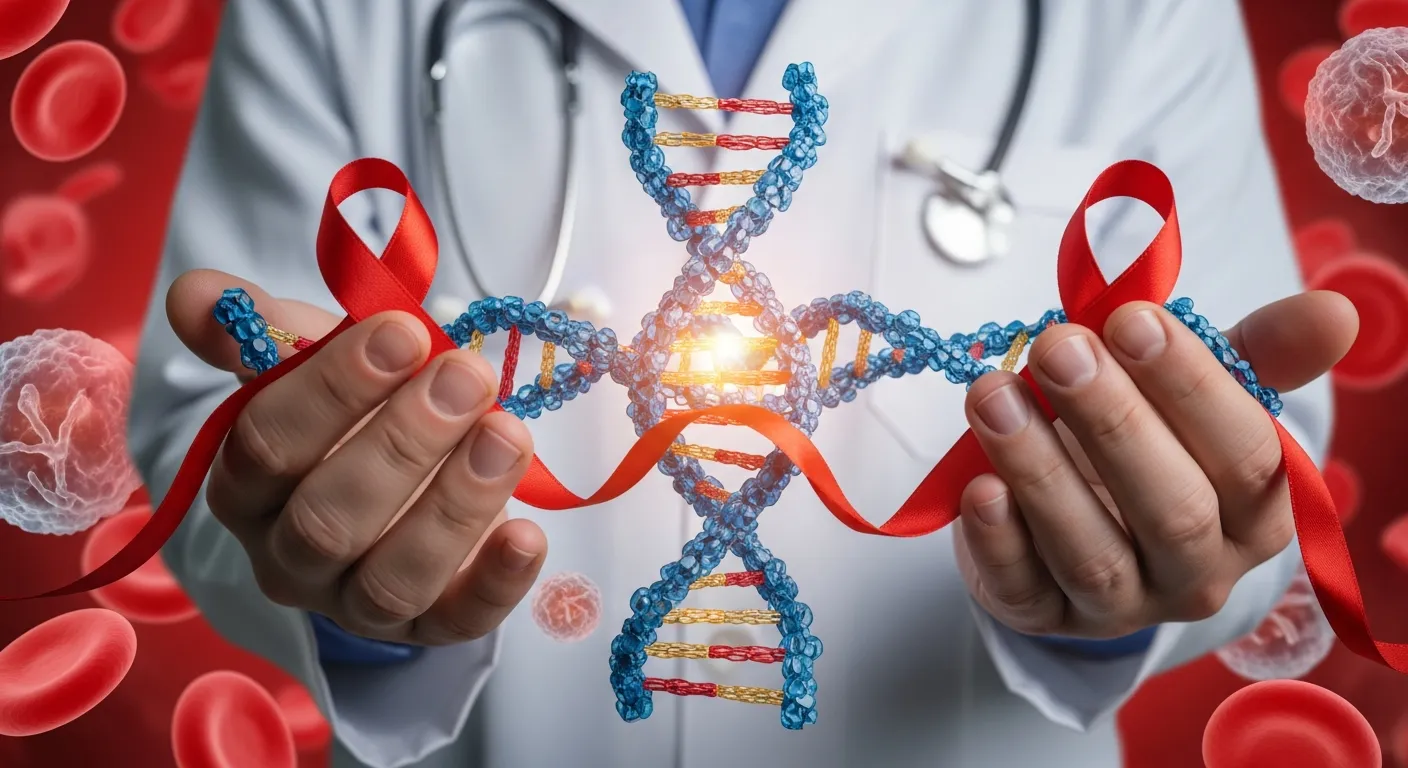
Thalassemia Trait is a genetic blood condition where a person carries the thalassemia gene but usually shows mild or no symptoms. It is important for screening, early diagnosis, and genetic counseling to prevent inheritance in future generations.
The Genetics Behind Thalassemia Trait
To grasp how the thalasemia trait works, you need to look at the basic building blocks of your blood. Hemoglobin is the vital protein inside red blood cells responsible for carrying oxygen from your lungs to the rest of your body.
Hemoglobin and its role
Healthy hemoglobin is made up of two main components: alpha-globin chains and beta-globin chains. Your body needs to produce these chains in perfectly balanced amounts. When a genetic mutation disrupts the production of either the alpha or beta chains, it results in thalassemia. In many cases, this leads to a mild form known as Thalassemia Trait, where symptoms may be minimal but the genetic change is still present in the body.
Alpha vs. Beta thalassemia genes
There are two primary categories of the condition. Alpha thalassemia minor occurs when one or two of the four alpha-globin genes are missing or mutated. Beta thalassemia occurs when one of the two beta-globin genes is altered. Both variations can result in the thalasemia trait, meaning you carry the genetic mutation but still produce enough normal hemoglobin to avoid severe illness. People with Thalassemia Trait usually live normal lives but may have mild anemia in some cases.
How thalassemia trait is inherited
The inheritance pattern is straightforward. You receive half of your genetic code from your mother and half from your father. If you inherit one mutated hemoglobin gene and one normal gene, you become a carrier. This means you have the trait. It is an autosomal recessive condition, which implies that a person must inherit two mutated genes (one from each parent) to develop the more severe disease. Understanding Thalassemia Trait inheritance is very important for family planning and future health awareness.
Genetic counseling and testing
Because the condition is passed down through families, genetic counseling is highly recommended for carriers. A genetic counselor can help you understand your specific DNA profile and risks. The Centers for Disease Control and Prevention (CDC) emphasizes that DNA testing can pinpoint the exact mutation, taking the guesswork out of your diagnosis and helping you plan your future safely. Early identification of Thalassemia Trait also helps prevent the risk of passing more severe forms of thalassemia to children.
Symptoms and Diagnosis of Thalassemia Trait
 Most people with Thalassemia Trait experience a relatively normal, symptom-free life. The body is highly adaptable and usually compensates for the slight hemoglobin imbalance without major health problems.
Often asymptomatic nature
For the vast majority of carriers, Thalassemia Trait is completely silent. You can play sports, pursue demanding careers, and live normally without ever feeling noticeable symptoms.
Mild anemia and its characteristics
When symptoms do appear, they are usually mild. You might feel slightly more tired than usual, especially during physical stress or illness. Blood tests often show microcytosis, meaning red blood cells are smaller and paler than normal. In Thalassemia Trait, this mild anemia does not usually require intensive treatment.
Differential diagnosis
Doctors often confuse Thalassemia Trait with iron deficiency anemia because both can show similar blood test results. However, iron supplements do not correct Thalassemia Trait. Unnecessary iron intake may even lead to iron overload, which can affect organs over time.
Key Differences Table
| Feature | Thalassemia Trait | Iron Deficiency Anemia |
|---|---|---|
| Cause | Genetic mutation | Low iron level |
| Red blood cell size | Small (microcytic) | Small (microcytic) |
| Iron level | Normal or high | Low |
| Treatment response | No response to iron | Improves with iron |
| Severity | Usually mild | Can become moderate/severe |
Important Points
- Thalassemia Trait is usually harmless and often symptom-free
- It is important to avoid unnecessary iron supplements
- Genetic testing confirms the exact diagnosis
- Family screening is recommended to understand inheritance risk
- Early diagnosis of Thalassemia Trait helps in better family planning
Understanding Thalassemia Trait helps prevent misdiagnosis and unnecessary treatment, ensuring proper care and awareness for long-term health management.
Living with Thalassemia Trait
 Receiving a diagnosis of the trait does not mean your life has to change drastically. However, knowing your status allows you to make smarter health choices.
Health implications and potential challenges
The primary health challenge is managing mild fatigue and ensuring you do not receive the wrong medical treatments. Since your red blood cells are smaller, your body might work a bit harder to deliver oxygen, occasionally leading to low energy levels.
Lifestyle adjustments and preventative care
Pacing your activities and getting adequate rest are simple ways to manage occasional fatigue. You should also ensure you stay well-hydrated and avoid excessive physical strain when you feel tired.
Dietary considerations
Eating a balanced diet is essential. You need plenty of folate (folic acid) to help your body produce new red blood cells. You should also be cautious with iron. Avoid highly iron-fortified foods and never take iron supplements unless a doctor confirms a genuine iron deficiency. For more specific meal planning, explore our resources on thalassemia diet and nutrition.
Importance of regular medical check-ups
Annual check-ups with your healthcare provider keep your overall health on track. Make sure any new doctor you visit knows about your trait so they can interpret your blood tests correctly.
Thalassemia Trait and Family Planning
The most profound impact of carrying the Thalassemia Trait often revolves around family planning and having children. Because it is a genetic condition, understanding inheritance patterns and seeking medical guidance is essential before starting a family. Open discussions between partners and proactive testing can greatly reduce the risk of severe outcomes.
Risk of passing on the Thalassemia Trait
If you have Thalassemia Trait and your partner does not, your children have a 50 percent chance of inheriting the trait. In this case, they will typically remain healthy and will not develop the severe form of thalassemia. However, they may still carry the gene and pass it on to future generations. This makes awareness of Thalassemia Trait important for long-term family health planning.
Understanding carrier status in Thalassemia Trait
When both parents are carriers of Thalassemia Trait, the inheritance risks become more significant. In each pregnancy, there is a 25 percent chance the child will inherit two mutated genes and develop severe thalassemia disease. There is a 50 percent chance the child will inherit the trait like the parents, and a 25 percent chance the child will inherit completely normal hemoglobin genes. Understanding these probabilities helps couples make informed reproductive decisions.
Preimplantation Genetic Diagnosis (PGD) and prenatal testing
Modern medicine offers several advanced options to manage the risks associated with Thalassemia Trait. Preimplantation Genetic Diagnosis (PGD) can be used during in vitro fertilization (IVF) to select embryos that do not carry severe mutations. For natural pregnancies, prenatal tests such as chorionic villus sampling (CVS) or amniocentesis can determine the baby’s genetic status early in pregnancy. These tools are especially valuable for couples where both partners carry Thalassemia Trait.
Importance of genetic counseling for couples with Thalassemia Trait
Genetic counseling plays a crucial role in managing Thalassemia Trait in family planning. A genetic counselor helps calculate exact inheritance risks, explains test results in simple terms, and guides couples through available options. They also provide emotional support, helping families make informed choices that align with their values, lifestyle, and future goals. For many couples, counseling ensures that decisions about Thalassemia Trait are made with clarity and confidence.
Dispelling Myths and Misconceptions
Misinformation about genetic blood conditions is very common, and Thalassemia Trait is often misunderstood. Clearing up these myths is important so patients can better understand their condition and make informed health decisions.
Thalassemia Trait is not a disease
Thalassemia Trait is a genetic characteristic, not an active disease. It is similar to inherited traits like eye or hair color. People with Thalassemia Trait may have slight changes in red blood cell size or mild anemia, but it does not progress into a serious illness. Most individuals live completely normal lives without medical complications.
Differentiating trait from major thalassemia
One of the biggest misconceptions is confusing Thalassemia Trait with thalassemia major. Thalassemia major is a severe and life-threatening blood disorder that requires ongoing medical treatment, including frequent blood transfusions and specialized care. In contrast, Thalassemia Trait is a mild carrier state and does not cause severe health problems. Understanding this difference is essential to avoid unnecessary fear and anxiety.
Addressing concerns about blood transfusions in Thalassemia Trait
People with Thalassemia Trait do not require regular blood transfusions. Transfusions are only needed for individuals who have severe forms of thalassemia where the body cannot produce enough healthy hemoglobin. For carriers of Thalassemia Trait, treatment is usually not required, and routine medical monitoring is sufficient.
Common misconceptions about Thalassemia Trait
- Myth: Thalassemia Trait always leads to serious illness
Fact: It is usually mild and non-progressive - Myth: Iron supplements cure Thalassemia Trait
Fact: Iron does not treat the genetic cause - Myth: People with Thalassemia Trait cannot live normal lives
Fact: Most carriers live healthy, normal lives - Myth: Thalassemia Trait always causes severe anemia
Fact: Many carriers have no symptoms at all
By understanding the truth about Thalassemia Trait, individuals can avoid unnecessary treatments and focus on proper genetic awareness and family planning when needed.
Research and Future Directions
 The scientific community is constantly learning more about human genetics, and this progress is especially important for blood disorders like Thalassemia Trait. Ongoing studies are helping doctors improve diagnosis, prevention, and long-term family counseling.
Advances in genetic research and Thalassemia Trait
Organizations such as the National Institutes of Health (NIH) are continuously mapping hemoglobin mutations linked to Thalassemia Trait and other hemoglobin disorders. As this genetic data grows, testing is becoming faster, more affordable, and highly accurate. Researchers are also identifying new mutation patterns that help explain why some people with Thalassemia Trait show very mild symptoms while others may experience mild anemia.
New diagnostic techniques for Thalassemia Trait
Modern medicine is improving how early Thalassemia Trait can be detected. Scientists are developing non-invasive prenatal testing methods that require only a simple blood sample from the mother. This reduces the need for older invasive procedures like amniocentesis, making screening safer for both mother and baby. Early detection of Thalassemia Trait is especially important for couples planning a family, as it helps assess the risk of passing on more severe forms of thalassemia.
Potential therapeutic interventions and future hope
Although individuals with Thalassemia Trait usually do not require treatment, research into gene-editing technologies like CRISPR is transforming the future of genetic medicine. These innovations aim to correct faulty genes responsible for severe thalassemia conditions. By studying how the body naturally adapts in Thalassemia Trait, scientists gain valuable insights into developing therapies for more serious blood disorders. This research may one day lead to long-term solutions that go beyond symptom management and move toward true genetic correction.
FAQs
1. What is Thalassemia Trait?
Thalassemia Trait is a genetic carrier condition where a person inherits one mutated hemoglobin gene from a parent. Most people with Thalassemia Trait do not develop severe symptoms and often live normal, healthy lives.
2. Is Thalassemia Trait a disease?
No, Thalassemia Trait is not considered a disease. It is a carrier state that affects hemoglobin production slightly but does not usually cause serious health problems or long-term complications.
3. Can Thalassemia Trait cause symptoms?
Most individuals with Thalassemia Trait have no symptoms at all. In some cases, mild anemia, slight fatigue, or reduced red blood cell size may appear, but these are usually not severe enough to affect daily life.
4. How is Thalassemia Trait diagnosed?
Doctors diagnose Thalassemia Trait using blood tests such as Complete Blood Count (CBC), hemoglobin electrophoresis, and sometimes genetic testing. These tests help confirm carrier status accurately.
5. Can Thalassemia Trait turn into thalassemia major?
No, Thalassemia Trait does not develop into thalassemia major. However, if both parents are carriers, there is a risk their child may inherit the severe form of thalassemia.
6. Do people with Thalassemia Trait need treatment?
Most people with Thalassemia Trait do not need any treatment. Medical care is only required if there is another condition, such as iron deficiency anemia, confirmed by a doctor.
7. Is iron supplement useful for Thalassemia Trait?
Iron supplements are not effective for Thalassemia Trait unless a person is also diagnosed with iron deficiency. Taking iron without medical advice may lead to unnecessary iron buildup in the body.
8. Can a person with Thalassemia Trait live a normal life?
Yes, people with Thalassemia Trait can live completely normal lives. They can study, work, exercise, and carry out daily activities without any major restrictions.
9. Why is genetic counseling important in Thalassemia Trait?
Genetic counseling helps individuals understand their carrier status, inheritance patterns, and risks for future children. It is especially important for couples planning a family.
10. Can two carriers of Thalassemia Trait have a healthy child?
Yes, two carriers can have a healthy child. However, there is also a risk of having a child with severe thalassemia, so proper testing and counseling are strongly recommended before pregnancy.
Conclusion
Thalassemia Trait is a common and usually harmless genetic condition that many people live with without any major health issues. Although it is not a disease, understanding Thalassemia Trait is very important for accurate diagnosis, avoiding unnecessary treatment, and proper family planning. Awareness of inheritance risks helps couples make informed decisions and reduces the chance of severe thalassemia in children. With proper genetic counseling, screening, and education, individuals with Thalassemia Trait can lead normal, healthy lives while staying informed about their genetic status.
