



Silent carrier alpha thalassemia means one of your four alpha-globin genes is missing or mutated. The three remaining genes produce enough hemoglobin, so carriers have no symptoms and usually feel completely healthy. Most discover their status only through genetic testing.
Many people carry a genetic blood trait without ever knowing it. Silent carrier alpha thalassemia is the mildest form of alpha thalassemia, and it lives up to its name—it produces no symptoms, rarely shows up on routine blood work, and usually goes undetected for a lifetime. Yet understanding this quiet condition matters, especially for couples planning a family.
This guide breaks down what silent carrier alpha thalassemia is, how it’s inherited, why it stays hidden, and what your blood test results might reveal. You’ll also learn how it differs from the alpha thalassemia trait, why genetic counseling is so valuable, and what carriers need to know before starting a family. By the end, you’ll have a clear, practical picture of this common but often overlooked genetic state.
Whether you’ve just received a confusing test result or you’re researching for peace of mind, the information here is designed to be accurate, easy to follow, and genuinely useful.
What Is Silent Carrier Alpha Thalassemia?
To understand the silent carrier state, it helps to start with the basics of thalassemia itself.
What is thalassemia?
Thalassemia is an inherited blood disorder that affects how the body produces hemoglobin—the iron-rich protein inside red blood cells that carries oxygen from your lungs to the rest of your body. When hemoglobin production is reduced or imbalanced, red blood cells become smaller, paler, and more fragile. This can lead to chronic anemia in more severe cases.
An overview of alpha thalassemia
Alpha thalassemia specifically affects the production of alpha-globin chains, one of the two protein building blocks of normal adult hemoglobin. Four genes—two inherited from each parent—control alpha-globin production. The number of working genes determines how severe the condition is. Alpha thalassemia ranges from a silent carrier state with no symptoms to hemoglobin H disease and, in the most severe form, hydrops fetalis.
Defining the “silent carrier” state
A silent carrier is someone missing just one of the four alpha-globin genes (a genotype often written as -α/αα). With three working genes still in place, the body produces nearly normal amounts of hemoglobin. Because red blood cell function stays stable, silent carriers experience a complete absence of symptoms. This is why the condition is called “silent.” Most carriers only learn about their status through specialized DNA testing or family screening.
The Genetics Behind Silent Carrier Alpha Thalassemia
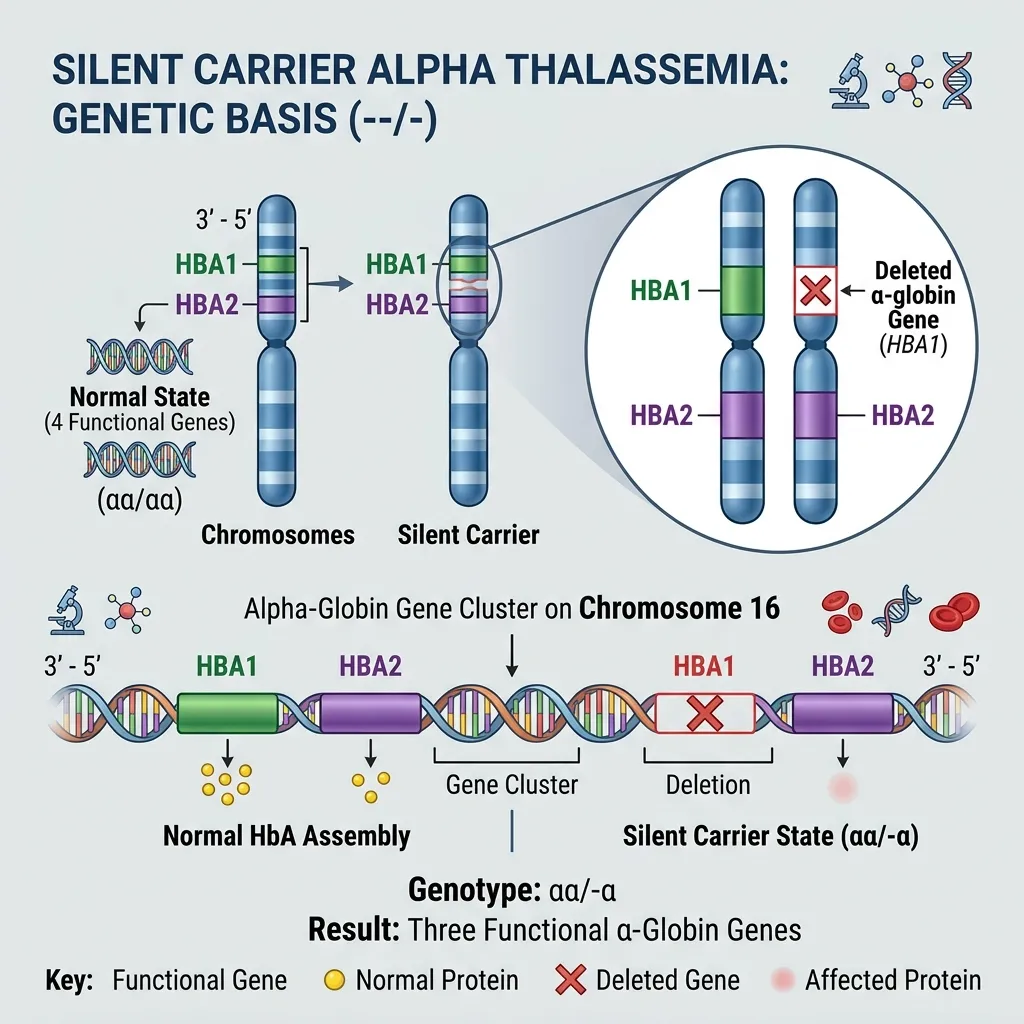 The silent carrier state is purely a matter of genetics. Understanding the science makes the condition far less intimidating.
Hemoglobin and alpha-globin genes
Normal adult hemoglobin needs a precise balance of two alpha-globin chains and two beta-globin chains. The four alpha-globin genes sit on chromosome 16. When all four work normally, alpha-globin production is balanced, and red blood cells form correctly.
How a single gene deletion leads to silent carrier status
When one of the four alpha-globin genes is deleted or mutated, the three remaining genes pick up the slack. They produce enough alpha-globin to keep hemoglobin levels essentially normal. The result is a person who carries the trait but shows no measurable health effects. This single-gene loss is the defining feature of silent carrier alpha thalassemia.
Inheritance patterns and risk factors
Alpha thalassemia follows an inheritance pattern passed down through families. A silent carrier can pass the affected gene to their children. The risk to offspring depends heavily on the partner’s genetic status. If both partners carry alpha thalassemia genes, the chance of having a child with a more serious form rises. Ancestry also plays a role—alpha thalassemia is more common in people of Southeast Asian, African, Mediterranean, and Middle Eastern descent.
Understanding Silent Carrier Alpha Thalassemia Symptoms
One of the most common questions about this condition concerns alpha thalassemia silent carrier symptoms—and the answer is reassuringly simple.
Why “silent” means asymptomatic
Silent carriers do not experience symptoms. With three functioning alpha-globin genes, the body maintains normal oxygen delivery, so there’s no anemia, no fatigue, and no visible signs. Daily life is completely unaffected. People with this trait can pursue demanding careers, intense physical activity, and pregnancy without limitations tied to the condition.
Are there any subtle indicators?
In the vast majority of cases, alpha thalassemia silent carrier symptoms are entirely absent. Routine blood tests usually appear normal. Occasionally, red blood cells may be very slightly smaller than average, but this rarely causes any noticeable problem and is often missed unless specifically investigated. For practical purposes, silent carriers are considered symptom-free.
Why screening still matters for reproductive planning
The lack of symptoms is exactly why screening is so important. Because silent carriers feel perfectly healthy, they can unknowingly pass the gene to their children. When two carriers have children together, the genetic combinations can produce more serious forms of alpha thalassemia. Screening turns invisible genetics into actionable information for family planning.
Diagnosis: Silent Carrier Thalassemia Blood Test Results
Diagnosing the silent carrier state can be tricky, because standard tests often look normal. Here’s how doctors approach it.
Initial screening tests (CBC and MCV)
The diagnostic process usually starts with a Complete Blood Count (CBC). Doctors examine red blood cell indices, especially the Mean Corpuscular Volume (MCV), which measures red blood cell size. In many carriers of alpha thalassemia, the MCV may be low, signaling smaller-than-normal cells. However, in true silent carriers, the CBC frequently appears completely normal, which is one reason the condition slips under the radar.
Advanced diagnostic methods
When initial screening raises questions—or when a normal CBC doesn’t rule out a suspected trait—more specialized testing is needed.
Hemoglobin electrophoresis (and why it’s often normal): This test separates and measures the different types of hemoglobin in the blood. In silent carriers, hemoglobin electrophoresis usually comes back normal because the single-gene loss doesn’t significantly change hemoglobin composition. A normal result does not rule out the silent carrier state, which is a key point for both patients and clinicians.
Genetic testing (the definitive test): DNA analysis is the only way to confirm silent carrier alpha thalassemia. Genetic testing maps the alpha-globin genes and directly identifies the missing or mutated gene. Because silent carriers often have normal CBC and electrophoresis results, genetic testing is the gold standard for confirmation. To explore the full diagnostic pathway, see this guide on thalassemia diagnosis methods.
Interpreting blood test results for silent carriers
When reviewing silent carrier thalassemia blood test results, doctors look at the full picture. A low MCV with normal iron levels (normal ferritin) is a classic clue that points toward a thalassemia trait rather than iron deficiency. This distinction is critical, because treating a genetic carrier with iron supplements is ineffective and potentially harmful. For a deeper look at how these numbers are read, this thalassemia blood test guide breaks down each value.
The Difference Between Silent Carrier and Alpha Thalassemia Trait
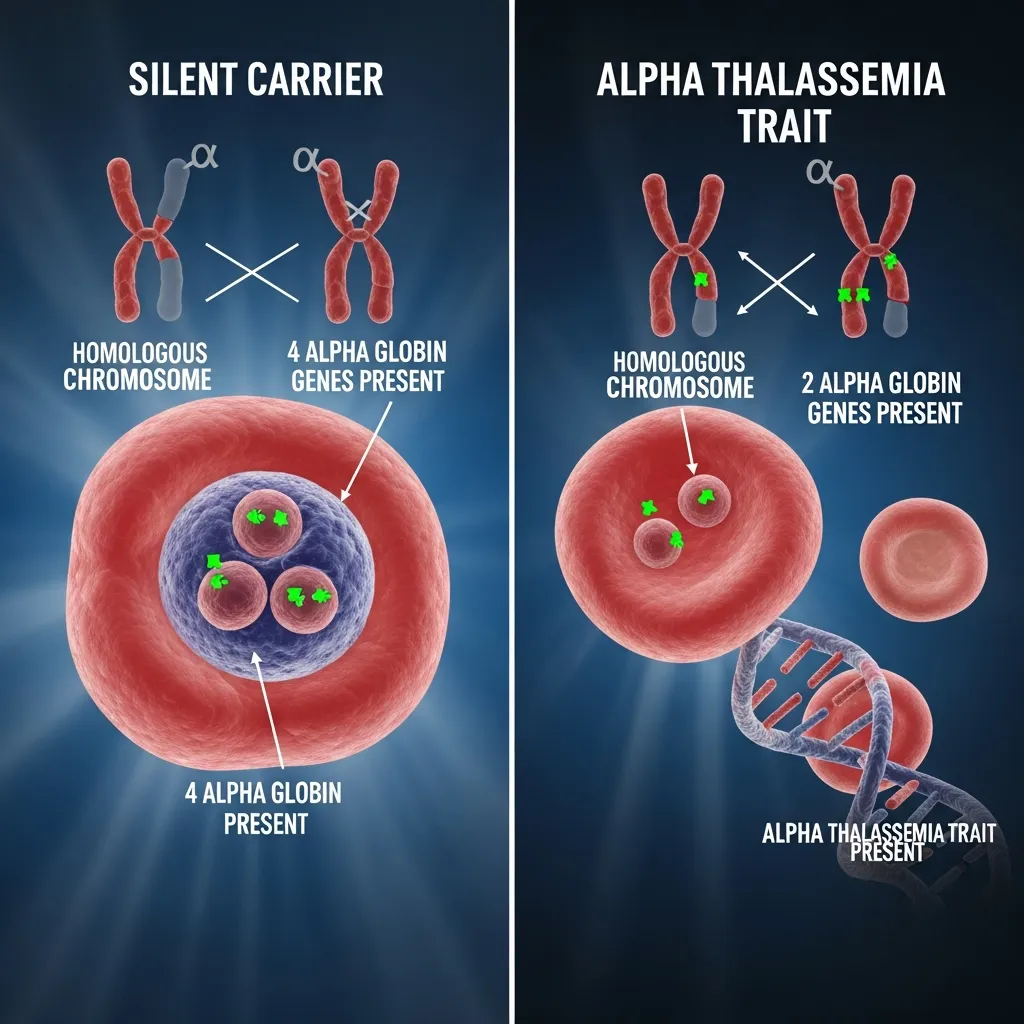 People often confuse the silent carrier state with the alpha thalassemia trait. Understanding the difference between a silent carrier and the alpha thalassemia trait clears up a lot of uncertainty.
Genetic basis of each condition
The core distinction is the number of affected genes. A silent carrier is missing one alpha-globin gene (-α/αα). The alpha thalassemia trait, also called alpha thalassemia minor, involves two missing genes (–/αα or -α/-α). That one extra missing gene changes how the condition appears on tests and how it’s passed to children.
Clinical manifestations and severity
Silent carriers typically show no symptoms and usually have normal blood test results. People with the alpha thalassemia trait may have mild microcytosis—red blood cells that are noticeably smaller than normal—and occasionally very mild anemia. Even so, the trait is generally considered harmless and rarely requires treatment. The difference between silent carrier and alpha thalassemia trait is mostly about genetics and detectability rather than day-to-day health impact.
Reproductive implications of each
The reproductive stakes differ as well. Because the alpha thalassemia trait involves two affected genes, it carries a higher chance of passing more significant genetic combinations to children—particularly when both parents carry alpha thalassemia genes. Silent carriers carry a lower but still meaningful risk depending on their partner’s status. For more on the carrier state, this overview of the alpha thalassemia carrier explains how inheritance works.
Living with Silent Carrier Alpha Thalassemia
A diagnosis of silent carrier alpha thalassemia rarely changes anything about daily life—but it does come with a few smart steps.
No specific medical management required
Silent carriers need no treatment. The body naturally compensates for the single missing gene, and hemoglobin levels stay close to normal. There are no medications, no transfusions, and no special restrictions. The most important practical step is simply telling your doctor about your carrier status so that mild microcytosis isn’t mistaken for iron deficiency anemia and treated with unnecessary iron.
The importance of genetic counseling
Genetic counseling is the most valuable resource for silent carriers. A genetic counselor can explain inheritance patterns in plain language, calculate the risk to future children, and help you interpret your results alongside your partner’s. This guidance turns abstract genetics into clear, personalized decisions.
Family planning and partner screening
Partner screening is the cornerstone of family planning for carriers. Because the risk to children depends on both partners’ genetics, knowing your partner’s status is essential. If both partners carry alpha thalassemia genes, a counselor can outline the possible outcomes for each pregnancy and discuss available options.
Silent Carrier Alpha Thalassemia and Pregnancy
For couples expecting or planning a baby, understanding the genetic picture brings peace of mind and informed choices.
Risks to offspring
A silent carrier can pass the affected gene to a child. Whether that leads to a more serious condition depends on the other parent’s genes. If only one parent is a silent carrier and the other has no alpha thalassemia genes, children may inherit the silent carrier trait at most—a harmless outcome. The risk rises when both partners carry alpha thalassemia genes.
Prenatal diagnosis options
When both partners are carriers, prenatal testing can determine the baby’s genetic status. Options include chorionic villus sampling (CVS) and amniocentesis, both of which analyze fetal DNA. These tests give families precise information early in pregnancy. The March of Dimes offers helpful resources on prenatal genetic testing for expecting parents.
Counseling for couples at risk
Couples identified as at-risk benefit enormously from genetic counseling. Counselors explain the statistical likelihood of different outcomes, walk families through testing options, and provide emotional support throughout the process. This professional guidance helps remove confusion and fear from what can feel like an overwhelming situation.
Global Prevalence and Public Health Importance
Silent carrier alpha thalassemia is far from rare—it’s part of a much larger global health picture.
Geographic distribution
Alpha thalassemia is most common in Southeast Asia, but it also appears frequently in African, Mediterranean, and Middle Eastern populations. In some regions, a significant percentage of the population carries an alpha thalassemia gene. The World Health Organization recognizes thalassemia as a major global public health concern, particularly in these high-prevalence areas.
Screening programs and their impact
Many countries with high carrier rates have launched screening programs, including premarital and prenatal testing. These initiatives identify carriers early, support genetic counseling, and help reduce the number of severe cases in future generations. Public health education plays a powerful role in turning silent genetics into preventable outcomes.
Dispelling Myths About Silent Carrier Alpha Thalassemia
 Misunderstandings about this condition are common. Let’s set the record straight.
Common misconceptions
A frequent myth is that being a silent carrier means you’ll eventually get sick. This is false. Your genetic makeup doesn’t change over time, and a silent carrier will not develop a severe form of the disease later in life. Another misconception is that carriers need treatment or supplements—they don’t. Some people also wrongly believe thalassemia is contagious; it is strictly inherited and cannot be passed through contact.
Clarifying the health impact
The honest takeaway is that silent carrier alpha thalassemia has virtually no impact on personal health. Carriers live completely normal lives. The real significance of the condition lies in reproduction and family planning, not in personal illness. Understanding this difference helps carriers move from worry to confidence.
Conclusion
Silent carrier alpha thalassemia is the mildest form of alpha thalassemia, defined by a single missing alpha-globin gene. It produces no symptoms, often goes undetected on standard blood work, and requires no medical treatment. Its true importance lies in family planning—because carriers can pass the gene to their children.
If you suspect you might be a carrier, or if a blood test showed small red blood cells with normal iron levels, the smart next step is to talk with your doctor about genetic testing. For couples planning a family, partner screening and genetic counseling offer clarity and confidence. To learn more about the broader spectrum of the condition, explore this guide on alpha thalassemia symptoms and how the different types compare.
Knowledge is the most powerful tool for any career. With accurate testing and good counseling, you can make informed decisions and protect the health of future generations.
Frequently Asked Questions (FAQs)
1. What is silent carrier alpha thalassemia?
Silent carrier alpha thalassemia is the mildest form of alpha thalassemia, caused by the loss of one of the four alpha-globin genes. The three remaining genes produce enough hemoglobin, so carriers have no symptoms and usually feel completely healthy.
2. What are the alpha thalassemia silent carrier symptoms?
There are typically no alpha thalassemia silent carrier symptoms. Carriers feel healthy, have normal energy levels, and usually show normal results on routine blood tests. The condition is asymptomatic by definition.
3. How is silent carrier alpha thalassemia diagnosed?
It is diagnosed through genetic (DNA) testing, which is the definitive method. A CBC and hemoglobin electrophoresis are often normal in silent carriers, so only genetic testing can confirm the missing alpha-globin gene.
4. What do silent carrier thalassemia blood test results look like?
Silent carrier thalassemia blood test results often appear normal. The MCV may sometimes be slightly low, but ferritin (iron) levels are normal. Because routine tests can look unremarkable, genetic testing is needed for a definitive diagnosis.
5. What is the difference between silent carrier and alpha thalassemia trait?
The main difference between silent carrier and alpha thalassemia trait is the number of affected genes. A silent carrier is missing one gene and shows no symptoms, while the alpha thalassemia trait involves two missing genes and may cause mild microcytosis.
6. Does a silent carrier need treatment?
No. Silent carriers require no medical treatment, medication, or special diet. The most important step is informing your doctor so mild microcytosis isn’t mistaken for iron deficiency and treated with unnecessary iron supplements.
7. Can a silent carrier pass the condition to their children?
Yes. A silent carrier can pass the affected gene to their children. Whether this leads to a more serious form depends on the partner’s genetic status, which is why partner screening is important.
8. Will a silent carrier ever develop severe thalassemia?
No. Your genetic makeup does not change over time. A silent carrier will not progress to a severe form of the disease later in life.
9. Is genetic counseling necessary for silent carriers?
Genetic counseling is highly recommended, especially before starting a family. A counselor can explain inheritance risks, interpret results alongside a partner’s status, and guide reproductive decisions.
10. Is silent carrier alpha thalassemia common?
Yes, it is relatively common, especially in people of Southeast Asian, African, Mediterranean, and Middle Eastern descent. Many carriers never realize they have the trait without genetic testing.
