



Alpha thalassemia trait symptoms are often mild or absent, making the condition difficult to detect without testing. Some individuals may experience mild anemia, fatigue, or weakness, while many remain symptom-free. Understanding the signs of the alpha thalassemia trait and seeking proper diagnosis can help with early detection, family planning, and informed healthcare decisions.
Alpha thalassemia trait usually causes no symptoms. Some people notice mild fatigue, pallor, or shortness of breath linked to mild anemia. The condition is genetic, harmless, and confirmed through blood tests and DNA analysis.
Most people who carry the alpha thalassemia trait feel perfectly healthy. They go through life without a single clue that two of their four alpha-globin genes are missing. That’s because the body adapts—it produces enough hemoglobin to keep red blood cells working. Still, a small number of carriers notice subtle signs, and understanding alpha thalassemia trait symptoms can help you separate harmless genetics from a problem that needs attention.
This guide explains what the alpha thalassemia trait is, why it often stays silent, and which signs to watch for. You’ll also learn how doctors confirm a diagnosis, why iron supplements can do more harm than good, and what the trait means for couples planning a family. Whether you’ve just received a confusing blood test result or you’re researching for peace of mind, the information here is clear, accurate, and built to genuinely help.
Alpha thalassemia affects millions of people worldwide. It’s especially common in those of Southeast Asian, African, Mediterranean, and Middle Eastern descent. Knowing your carrier status matters—not for your daily health, but for the health of future generations.
What Is Alpha Thalassemia Trait?
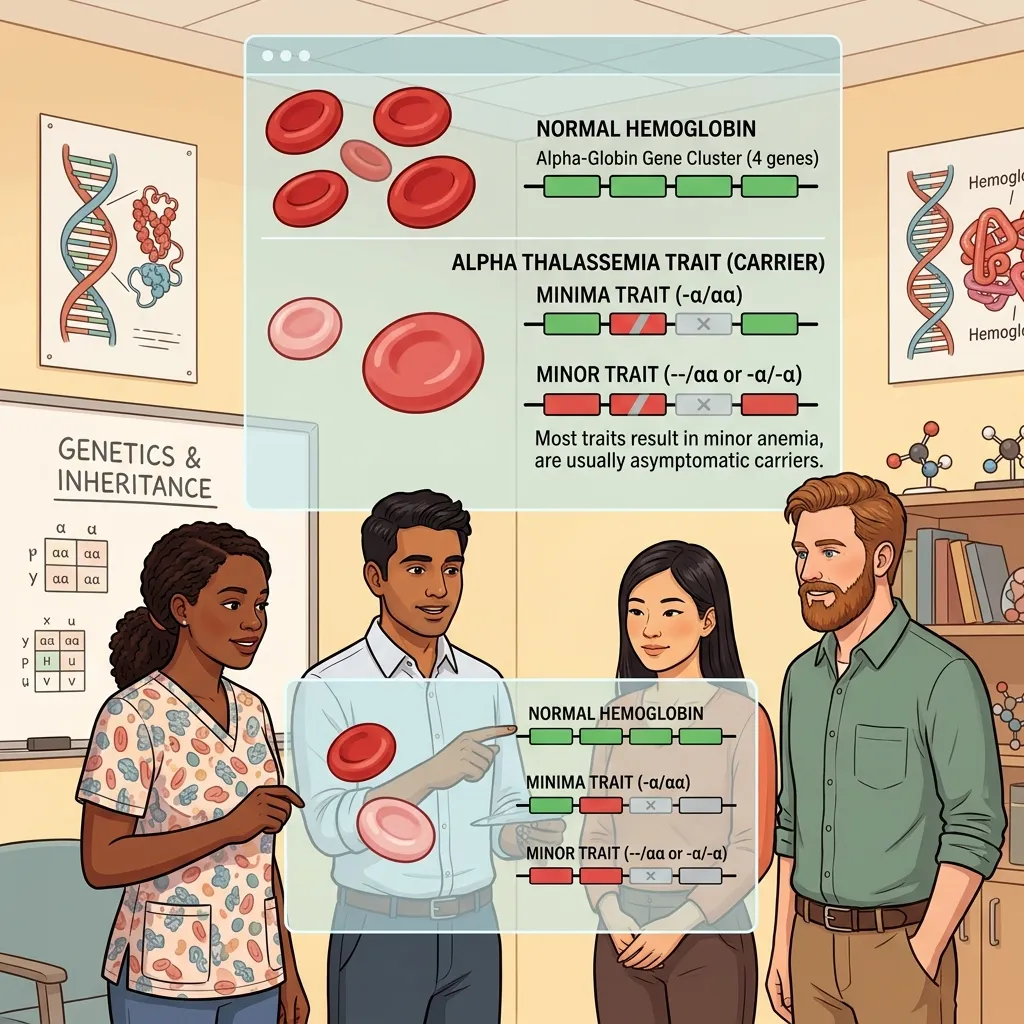 Alpha thalassemia trait, also called alpha thalassemia minor, is an inherited blood condition caused by the loss of two of the four alpha-globin genes. These genes control how your body makes alpha-globin, one of the building blocks of hemoglobin—the protein in red blood cells that carries oxygen throughout your body.
When two genes are missing, the two remaining genes still produce hemoglobin, just slightly less than usual. The result is mild microcytosis (smaller red blood cells) and sometimes very mild anemia. For most carriers, this causes no noticeable health effects at all.
Alpha thalassemia trait is one point on a wider spectrum. The silent carrier state involves just one missing gene and produces no symptoms. Hemoglobin H disease, caused by three missing genes, leads to moderate or severe anemia. The most severe form, hydrops fetalis, involves all four genes and is usually fatal. The alpha thalassemia trait sits firmly on the mild end of this scale.
Understanding alpha thalassemia trait symptoms is crucial for one main reason: family planning. Because carriers feel healthy, they can unknowingly pass the gene to their children. When both parents carry alpha thalassemia genes, the risk of having a child with a serious form rises sharply.
How Genetics Cause the Alpha Thalassemia Trait
The alpha thalassemia trait is purely a matter of genetics. Understanding the science makes the condition far less intimidating.
Hemoglobin and Its Role
Normal adult hemoglobin needs a precise balance of two alpha-globin chains and two beta-globin chains. When this balance holds, red blood cells form correctly and carry oxygen efficiently. When alpha-globin production drops, the balance tips, and red blood cells become smaller and paler than normal.
The Alpha-Globin Genes (HBA1 and HBA2)
Four alpha-globin genes sit on chromosome 16—two inherited from each parent. These genes, known as HBA1 and HBA2, work together to produce alpha-globin chains. When all four function normally, alpha-globin production stays balanced.
How Gene Deletions Lead to the Trait
When two of the four alpha-globin genes are deleted or mutated, the trait appears. The two remaining genes can’t fully compensate, so the body produces slightly less alpha-globin. This leads to the characteristic small red blood cells. The two missing genes can be arranged in two ways: both on the same chromosome (–/αα) or one on each chromosome (-α/-α). This distinction matters for inheritance risk.
How the Trait Differs from Other Forms
The number of affected genes separates each form of alpha thalassemia. A silent carrier is missing one gene and shows no signs. The alpha thalassemia trait involves two missing genes and may cause mild changes on a blood test. For a closer look at the mildest end of the spectrum, this guide on the silent carrier alpha thalassemia explains how a single missing gene behaves.
Alpha Thalassemia Trait Symptoms: Often Silent, Sometimes Subtle
The most reassuring fact about alpha thalassemia trait symptoms is that most carriers don’t have any. The body compensates well enough that daily life is completely unaffected.
Why Many People Are Asymptomatic
With two working alpha-globin genes, the body maintains near-normal oxygen delivery. There’s usually no anemia severe enough to cause problems, no constant fatigue, and no visible signs. People with the trait can hold demanding jobs, exercise intensely, and go through pregnancy without limitations tied to the condition.
Common Subtle Indicators: Mild Anemia
When signs do appear, they trace back to mild anemia. The red blood cells are smaller and slightly fewer, so oxygen delivery dips a little. This rarely causes noticeable problems, but some carriers report feeling slightly more tired than usual, especially during stress, illness, or pregnancy.
Specific Alpha Thalassemia Carrier Symptoms to Watch For
The most common alpha thalassemia carrier symptoms, when present, include:
- Mild, ongoing fatigue
- Slight paleness of the skin
- Shortness of breath during physical activity
- Occasional dizziness
These signs are usually so mild that they go unnoticed or get blamed on a busy schedule.
How It Compares to Other Types of Anemia
This is where the alpha thalassemia trait often gets confused with iron deficiency anemia. Both produce small red blood cells. The key difference is iron levels: people with iron deficiency have low ferritin, while carriers of the alpha thalassemia trait have normal ferritin. This single detail is critical—and it shapes how the condition should be treated.
Unpacking the Signs of Alpha Thalassemia Trait
 Let’s look more closely at the specific signs of alpha thalassemia trait and what causes each one.
Fatigue and Weakness
Fatigue is the most reported symptom among carriers who notice anything at all. The cause is straightforward: slightly reduced oxygen delivery means muscles and organs receive a touch less fuel. For most people, this is barely perceptible. For others, it shows up as feeling worn out after activities that wouldn’t normally tire them.
Pallor: When to Be Concerned
Pale skin can occur because hemoglobin gives blood its red color, and slightly lower hemoglobin can make the skin look paler. Mild pallor is rarely a concern on its own. However, sudden or pronounced paleness paired with other symptoms is worth discussing with a doctor.
Shortness of Breath and Dizziness
These activity-related symptoms appear when the body demands more oxygen than usual—during exercise, for example. Mild anemia means the blood carries slightly less oxygen, so some carriers feel briefly breathless or lightheaded during exertion. Rest usually resolves it quickly.
Jaundice: A Rare but Possible Sign
Jaundice—a yellowing of the skin or eyes—is uncommon in the alpha thalassemia trait. It can occasionally appear if red blood cells break down faster than normal, releasing bilirubin. In carriers, this is rare and usually mild.
Splenomegaly: An Enlarged Spleen
An enlarged spleen, or splenomegaly, is also rare with the trait. The spleen filters out damaged red blood cells, and in more severe forms of thalassemia, it can become overworked and enlarged. In the alpha thalassemia trait, this is unusual and generally not a feature of the condition.
Why Alpha Thalassemia Trait Diagnosis Matters
Because the trait often hides, an accurate alpha thalassemia trait diagnosis is the only way to know your status for sure.
Why Early Detection Matters for Family Planning
The biggest reason to get an accurate diagnosis is reproductive planning. If both partners carry alpha thalassemia genes, their children face a higher risk of inheriting a serious form. Knowing your status early gives you time to make informed choices.
When to Suspect Alpha Thalassemia Trait
You might suspect the trait if a routine blood test shows small red blood cells (low MCV) but your iron levels come back normal. A family history of thalassemia or ancestry from a high-prevalence region also raises the likelihood.
Initial Screening: The Complete Blood Count
The first step in alpha thalassemia trait diagnosis is usually a Complete Blood Count (CBC). Doctors look at the Mean Corpuscular Volume (MCV), which measures red blood cell size. A low MCV is a common early clue. A detailed walkthrough of these results is available in this thalassemia blood test guide.
Further Diagnostic Steps
When a CBC raises questions, doctors order additional tests. Hemoglobin electrophoresis separates and measures the types of hemoglobin in the blood, though it often appears normal in the alpha thalassemia trait. Genetic testing is the definitive method—it maps the alpha-globin genes and confirms exactly how many are missing. For a full overview of the diagnostic pathway, see this guide on thalassemia diagnosis methods.
Differentiating from Iron Deficiency Anemia
This is one of the most important distinctions in diagnosis. Both conditions cause small red blood cells, but iron studies tell them apart. According to the Centers for Disease Control and Prevention, proper testing prevents carriers from being wrongly treated for iron deficiency. Getting this right avoids unnecessary—and potentially harmful—iron supplementation.
Living With Alpha Thalassemia Trait
A diagnosis of alpha thalassemia trait rarely changes daily life, but a few smart steps help.
Lifestyle and Dietary Considerations
Carriers need no special diet or restrictions. A balanced, nutrient-rich diet supports overall health. Foods rich in folate—such as leafy greens, beans, and lentils—help the bone marrow produce healthy red blood cells.
The Role of Folic Acid
Folic acid provides the building blocks the body uses to make new red blood cells. Some doctors recommend it as a gentle supportive supplement, especially during pregnancy. It’s safe and supports healthy red blood cell production.
Why You Should Avoid Iron Supplements
This is a key point: carriers should not take iron supplements unless a doctor confirms a genuine deficiency. Because the small red blood cells can be mistaken for iron deficiency, some carriers are wrongly prescribed iron. Unnecessary iron can build up and cause harm. Always confirm your status before taking any iron supplement.
Regular Monitoring and Follow-Up
The most important practical step is telling your doctor about your carrier status. This ensures mild microcytosis isn’t mistaken for iron deficiency. Occasional check-ups, especially during pregnancy or illness, help keep an eye on your general blood health.
Genetic Counseling and Family Planning
For prospective parents, the alpha thalassemia trait carries real significance—not for personal health, but for the next generation.
Why the Trait Matters for Prospective Parents
Because the trait is inherited, two carriers can pass more serious genetic combinations to their children. Knowing your status before starting a family lets you plan with confidence.
Understanding Inheritance and Risks
Alpha thalassemia follows an inheritance pattern passed down through families. The risk to children depends heavily on both partners’ genetics. If both parents carry alpha thalassemia genes, each pregnancy can carry a measurable risk of a more serious form.
Family Planning Options and Prenatal Diagnosis
Couples identified as at-risk have several options. Genetic counseling explains the statistical likelihood of different outcomes. Prenatal tests like chorionic villus sampling (CVS) and amniocentesis analyze fetal DNA to determine the baby’s genetic status early in pregnancy. To understand how a single missing gene compares to the trait, this overview of the silent carrier alpha thalassemia is a helpful resource.
Misconceptions and Facts About Alpha Thalassemia Trai
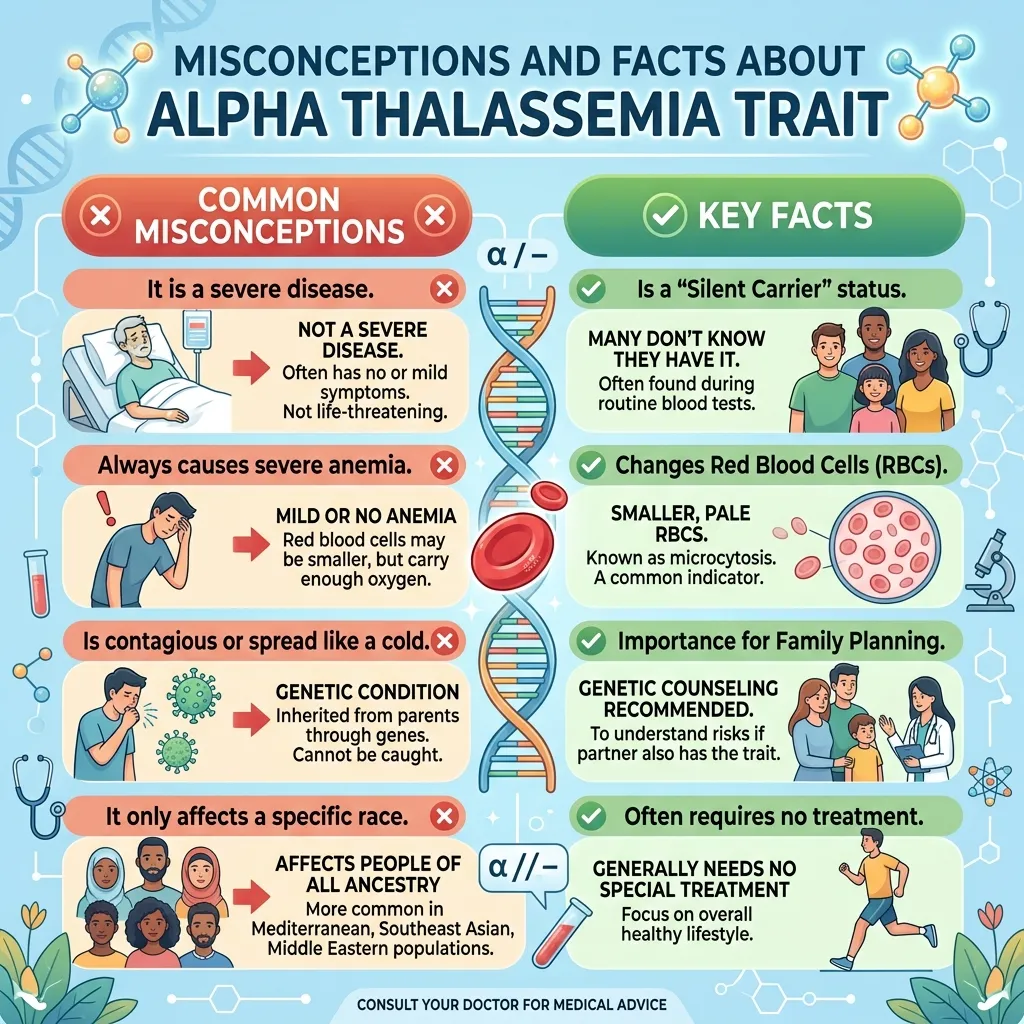 Misunderstandings about the trait are common. Let’s set the record straight.
Debunking Common Myths
A frequent myth is that carriers will eventually get sick. This is false—your genetic makeup doesn’t change over time, and the trait won’t progress to a severe form. Another myth is that thalassemia is contagious. It isn’t; it’s strictly inherited and cannot spread through contact.
Trait Versus Disease
The difference between trait and disease comes down to gene count. The trait (two affected genes) is mild and harmless. The disease forms (three or four affected genes) cause significant anemia and require medical care. Confusing the two causes unnecessary worry.
Why Accurate Information Matters
Good information turns fear into confidence. Carriers who understand their status can make smart decisions, avoid unnecessary treatments, and protect future generations.
Research and Future Directions
Science continues to deepen our understanding of alpha thalassemia and its management.
Ongoing Studies and Advancements
Researchers keep refining genetic testing, making it faster and more precise. Better detection means more carriers learn their status before starting a family.
Potential Therapeutic Strategies
For severe forms of thalassemia, gene-editing technologies like CRISPR-Cas9 are showing strong promise in clinical trials. While the alpha thalassemia trait needs no treatment, these advances offer hope for those with serious forms of the disease.
Global Awareness Initiatives
The World Health Organization recognizes thalassemia as a major global public health concern. Many countries run screening programs, including premarital and prenatal testing, to identify carriers early and reduce severe cases in future generations.
Conclusion
Alpha thalassemia trait is a mild, inherited condition caused by two missing alpha-globin genes. For most carriers, alpha thalassemia trait symptoms are absent, and daily life carries on completely normally. When signs do appear, they’re subtle—mild fatigue, pallor, or breathlessness tied to mild anemia.
The real importance of the trait lies in family planning. Because carriers feel healthy, they can pass the gene to their children without knowing. If you suspect you might carry the trait—perhaps because a blood test showed small red blood cells with normal iron—talk to your doctor about genetic testing.
The smartest next steps are simple: confirm your status, avoid unnecessary iron supplements, and consider genetic counseling if you’re planning a family. With accurate testing and good guidance, you can make informed decisions and protect the health of future generations. To explore the broader condition further, see this guide on thalassemia awareness.
Frequently Asked Questions (FAQs)
1. What is alpha thalassemia trait?
Alpha thalassemia trait, also called alpha thalassemia minor, is an inherited condition caused by the loss of two of the four alpha-globin genes. The two remaining genes still make hemoglobin, so the condition is mild and often causes no symptoms.
2. Are alpha thalassemia trait symptoms always noticeable?
No. Most carriers have no symptoms at all. When alpha thalassemia trait symptoms do appear, they’re usually subtle—mild fatigue, slight paleness, or shortness of breath during exercise, all linked to mild anemia.
3. How is alpha thalassemia trait diagnosed?
Alpha thalassemia trait diagnosis usually starts with a Complete Blood Count (CBC) that shows small red blood cells. Hemoglobin electrophoresis and genetic testing follow, with genetic (DNA) testing being the definitive method to confirm how many alpha-globin genes are missing.
4. Can alpha thalassemia trait be cured?
The alpha thalassemia trait needs no cure because it isn’t a disease—it’s a mild genetic carrier state. Your genetic makeup doesn’t change over time, and the trait won’t progress into a severe form.
5. Is alpha thalassemia trait hereditary?
Yes. Alpha thalassemia trait is passed down through families. A carrier can pass the affected genes to their children, and the risk of a serious form rises when both parents carry alpha thalassemia genes.
6. What are the risks of being an alpha thalassemia carrier?
The personal health risk is very low—most carriers live completely normal lives. The main risk is reproductive: two carriers can have a child with a more serious form of alpha thalassemia, which is why partner screening matters.
7. Do I need to take iron supplements if I have the alpha thalassemia trait?
No, not unless a doctor confirms a genuine iron deficiency. Carriers have normal iron levels despite having small red blood cells. Taking unnecessary iron can build up and cause harm, so always confirm your status first.
8. How does alpha thalassemia trait affect pregnancy?
Many carriers go through pregnancy without issues, though mild anemia may become slightly more noticeable. The bigger concern is genetic: if both partners are carriers, prenatal testing and genetic counseling can clarify the risk to the baby.
9. What is the difference between alpha thalassemia trait and alpha thalassemia major?
The difference is the number of affected genes. The trait involves two missing genes and is mild. The most severe form (often called hydrops fetalis, the alpha equivalent of “major”) involves all four missing genes and is usually fatal before or shortly after birth.
10. Where can I find more information and support for alpha thalassemia?
You can explore detailed guides on silent carrier alpha thalassemia, thalassemia diagnosis methods, and thalassemia awareness. For trusted medical information, organizations like the World Health Organization and the CDC offer reliable resources.
